Kleam Clinic Myeongdong · Non-Surgical Lifting, Lasers & Skin Boosters in Central Seoul


Clinical Guide
Volume Restoration Seoul: Stable Pricing vs Japan Annual Price Hike
The global landscape for anti-aging and facial rejuvenation has shifted dramatically, with patient focus placing a premium on structural restoration over superficial treatments. For patients evaluating options across...
Schedule a ConsultationThe global landscape for anti-aging and facial rejuvenation has shifted dramatically, with patient focus placing a premium on structural restoration over superficial treatments. For patients evaluating options across East Asia, localized economic factors have introduced a surprising variable: the stability of procedure pricing. A market review of regional aesthetic trends reveals that while neighboring countries like Japan face rolling price hikes on imported injectables due to structural shifts and fluctuating exchange rates, South Korea has maintained a highly stable, structured pricing ecosystem.
For individuals seeking to address mid-face volume loss, deep folds, or structural asymmetry, understanding these macroeconomic differences is essential. According to data from recent medical aesthetic market reports, the demand for non-energy-based structural treatments in Korea continues to expand steadily, with the broader domestic aesthetic device and injectables market projected to grow at a compound annual growth rate (CAGR) of over 7.5% through 2034. This growth is heavily anchored in predictable, transparent pricing models that benefit domestic and international patients alike.
This insights article, prepared in coordination with Kleam Clinic Myeongdong, analyzes the regional pricing trends, standard clinical pathways, and the strategic role of targeted volume restoration in achieving natural, long-term facial balance.
Volume Restoration in Korea: Stable Pricing vs Japan Annual Price Hike

When planning a long-term facial maintenance strategy, the compounding cost of care is just as critical as the immediate clinical outcome. Patients traveling across Asia for facial rejuvenation frequently compare Seoul and Tokyo. However, a comparative analysis of medical retail indexes shows a widening divergence in cost predictability.
In Japan, the aesthetic medicine market relies significantly on foreign-imported formulations, making consumer pricing highly sensitive to global supply chain adjustments and multi-year currency fluctuations. This has resulted in predictable annual baseline price increases across many Tokyo boutique clinics. Conversely, South Korea's robust domestic biotechnology sector produces a major share of the region's advanced dermal matrices and volume injectables. This dense ecosystem of local innovation creates a natural price ceiling, insulating patients in Seoul from sudden market volatility and ensuring consistent, structured rates year over year.
Advanced Dermal Fillers and Volume Restoration Costs and Outcomes in Korea
To understand why structural injectables remain the cornerstone of facial aging correction, it is necessary to examine how they are deployed and budgeted within specialized clinical settings.
What factors drive the total cost of facial contouring?
In traditional Western medical contexts or older regional models, facial contouring is frequently billed at flat, rigid package rates per syringe. In South Korea, advanced dermatology centers have largely transitioned to a hyper-localized, zone-based pricing model. This means patients are evaluated by specific anatomical zones (such as the deep pyriform space, lateral cheeks, or pre-jowl sulcus) and are billed precisely for the volume and density required to achieve structural correction in that specific area.
Standard Treatment Cost Benchmarks in Seoul
According to aggregated 2026 data from medical aesthetics surveys across the Seoul Capital Area, typical clinical price ranges for high-density structural injectables vary based on the origin of the product matrix:
- Premium Domestically Formulated Matrices: Approximately ₩300,000 to ₩450,000 per anatomical zone or milliliter.
- Imported Monophasic/Biphasic Matrices (e.g., European or American engineering): Approximately ₩650,000 to ₩850,000 per anatomical zone or milliliter.
This clear distinction allows patients to build highly customized treatment plans, selecting specific material properties based on the structural demands of different facial layers.
Current Facial Volumization Approaches & Limitations
The management of facial volume loss typically follows a specific clinical ladder. While standard interventions offer clear benefits, each carries definitive limitations that patients must consider over a multi-year timeline.
- Autologous Fat Transfer
- Mechanism: Harvesting fat via micro-liposuction from the abdomen or thigh and processing it for facial reinjection.
- Pros: High volume capability; uses the patient's own tissue, eliminating foreign material risks.
- Cons: Variable graft survival rates (often requiring over-correction); surgical donor-site downtime; permanent alterations if the patient's systemic weight fluctuates later.
- Traditional Low-Density Hyaluronic Acid Injections
- Mechanism: Superficial placement of highly fluid gel matrices to fill fine lines or minor depressions.
- Pros: Instant hydration effect; easily reversible via enzymatic degradation.
- Cons: Limited structural lifting capacity; higher migration rates when placed under heavy muscle layers; rapid degradation requiring re-intervention every 4 to 6 months.
- Superficial Energy-Based Devices (EBDs)
- Mechanism: Utilizing non-focused ultrasound or radiofrequency to contract loose dermal tissue.
- Pros: Non-invasive with zero barrier disruption.
- Cons: Incapable of replacing true fat pad atrophy or bone resorption; cannot restore deep structural shadows.
Innovative Approach: High-Precision Fillers & Volume Restoration
To overcome the short half-life of superficial treatments and avoid the downtime of surgery, modern clinical protocols utilize advanced Fillers & Volume Restoration. This high-precision approach focuses on deep structural placement rather than simply chasing superficial wrinkles.
The core principle relies on placing high-cohesivity, cross-linked biomatrices directly onto the deep periosteal layer (just above the bone) or within the deep sub-orbicularis oculi fat pads. By acting as a synthetic anchor beneath the dynamic facial muscles, the product lifts the overlying soft tissue structures uniformly. This high-precision placement ensures that when the patient smiles or speaks, the restored volume moves naturally with the facial expressions, entirely avoiding the static, over-filled appearance associated with outdated techniques.
Is Fillers & Volume Restoration in Korea worth the cost? Yes. By utilizing highly stable, cross-linked biomatrices placed precisely in deep tissue planes, this approach achieves immediate structural lifting that typically maintains its integrity for 12 to 18 months. When combined with Seoul's stable, predictable pricing ecosystem, patients experience significantly lower long-term maintenance costs and fewer clinical visits compared to traditional, superficial treatments.
Comparative Data: Conventional Paths vs. Advanced Volumization
The clinical outcomes of facial restoration are directly tied to the physical properties of the chosen matrix and the depth of delivery. The table below outlines key differentiators based on regional multi-year observation trends.
| Feature / Metric | Conventional Superficial Path | **Advanced Fillers & Volume Restoration ** |
|---|---|---|
| Primary Target Layer | Superficial dermis / upper subcutaneous fat | Deep periosteal space / deep fat compartments |
| Material Cohesivity | Low to medium (fluid, spreads rapidly) | High elasticity and cross-linking density |
| Average Duration of Effect | 4 to 6 months | 12 to 18 months |
| Risk of Material Migration | Higher under active dynamic muscle zones | Extremely low due to deep anatomical anchoring |
| Qualitative Outcome | Temporary smoothing of isolated lines | Comprehensive restoration of youthful facial contours |
| Long-Term Cost Efficiency | Lower initial cost, but high frequency | Stable, predictable long-term financial investment |
Local Korea Insights: The Shift Toward Soft, High-Precision Care
The evolution of volume restoration protocols is heavily driven by the expectations of the domestic Korean demographic. Patient preferences in Seoul strictly favor interventions with minimal social downtime and completely natural, undetectable transitions. This demands an exceptional level of precision; procedures must accommodate busy professional schedules while delivering immediate, balanced facial harmony.
Furthermore, the domestic regulatory environment supports this high standard. The Korean Ministry of Food and Drug Safety (MFDS) maintains rigorous verification pathways for newly engineered biomaterials, ensuring that clinics have immediate, highly regulated access to next-generation matrices. This structural framework allows specialized centers in Seoul to consistently deliver high-tier, predictable care that positions South Korea as a stable anchor for advanced aesthetics throughout the region.
Where Kleam Clinic Myeongdong Fits in Fillers & Volume Restoration in Korea
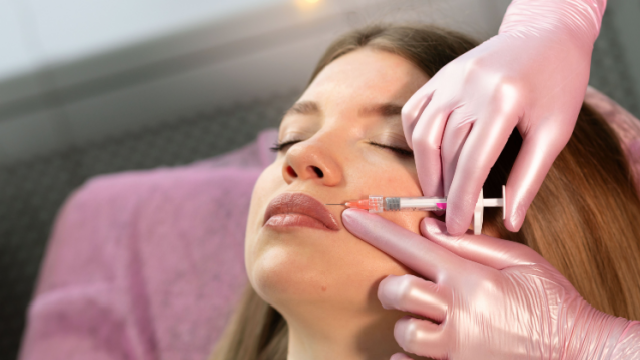
Situated in the heart of Seoul's central medical sector, Kleam Clinic Myeongdong specializes in advanced Fillers & Volume Restoration tailored specifically to individual structural anatomy. The clinic rejects the common, high-volume "factory style" model. Instead, every procedure is built around custom facial mapping, carefully identifying areas of bony resorption and deep fat compartment depletion before selecting a product matrix.
The medical staff at Kleam Clinic Myeongdong bring years of dedicated clinical experience to each treatment, ensuring that every injection is delivered with high-precision accuracy. By leveraging advanced micro-cannula techniques and strict depth-control protocols, the clinic optimizes patient comfort, minimizes localized tissue stress, and significantly reduces the risk of post-treatment bruising. This meticulous, evidence-aware approach provides patients with a reliable, structured framework for achieving sustained, balanced facial rejuvenation.
Conclusion
Managing age-related facial changes requires a clear understanding of both anatomical demands and market realities. While superficial lines can be treated temporarily, true facial balance requires structural volume correction that withstands natural facial movement. Navigating this path effectively requires consistent care within a stable, transparent economic framework—a balance that South Korea's advanced aesthetic sector is uniquely positioned to provide.
Patients considering Fillers & Volume Restoration in Korea can schedule a consultation to discuss whether this approach may be suitable for their specific condition and goals.
More Articles
Continue reading expert dermatology insights from Kleam Clinic Myeongdong.

Seoul Medical Tourism: Why Thermage FLX 4.0 Leads the Lifting Niche
Driven by a culture of precision and a "high-tech" approach to aging, South Korea has emerged as a global leader in non-surgical rejuvenation. A recent market report indicates that the South Korean medical tourism...
Learn More

Titanium Lifting Efficacy: 85% Skin Tightening in Korean Studies
The demand for non-invasive aesthetic procedures in South Korea has seen exponential growth, driven by a patient demographic that prioritizes immediate visibility, safety, and zero downtime. According to a Korean...
Learn More
Laser Toning for Skin: Complete 2026 Guide
Discover laser toning for skin in this complete 2026 guide. Learn benefits, costs, results, and how it treats pigmentation, melasma, and uneven skin tone safely.
Learn More